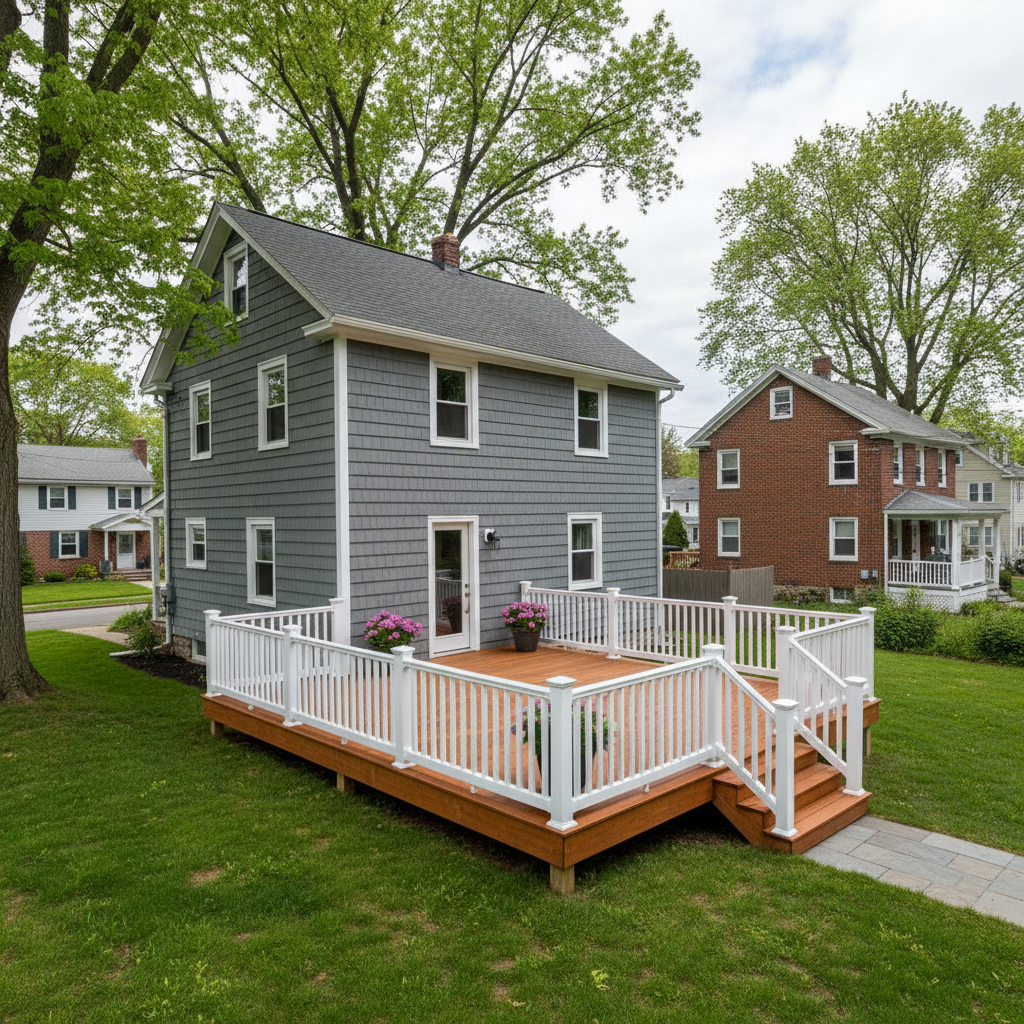
So, you're thinking about new deck railings, huh? Or maybe you're building a new deck and you're just trying to figure out what kind of railing makes the most sense. It's not just a cosmetic choice, believe me. Railings are a big deal for safety, first and foremost, but they also contribute a ton to your deck's overall look and how much maintenance you'll be doing down the road.
Why Railings Aren't One-Size-Fits-All Here in Woonsocket
You might see a beautiful railing system online or in a magazine and think, "That's the one!" But here in Woonsocket, we've got some specific things to consider. Think about our weather – those harsh winters with heavy snow loads, then the humid summers. Not every material holds up the same way, does it? Also, the style of homes varies a lot, from the older triple-deckers down near Social Street to the newer builds up towards the Cumberland line. What looks right on one might look totally out of place on another.
I've seen it all. Folks try to cut corners, or they pick something that just isn't designed for our climate. A few years later, they're calling me because their railings are rotting, fading, or just plain falling apart. That's why I always tell people to think about more than just the initial price tag.
Common Railing Options & What I've Seen Work (or Not)
Let's break down some of the popular choices and what you should know:
- Wood Railings: These are classic, right? They offer a natural look that's hard to beat, and they're usually the most budget-friendly upfront. You can get them in pressure-treated pine, cedar, or even redwood. The catch? They need maintenance. You're looking at regular cleaning, staining, or painting every few years to keep them looking good and prevent rot. If you're not up for that, you'll be replacing them sooner than you'd like. I've done plenty of wood railing replacements on decks that were otherwise solid, just because the homeowners couldn't keep up with the upkeep.
- Composite Railings: These are a step up in terms of low maintenance. They're made from a mix of wood fibers and plastic, so they resist rot, insects, and splintering. You won't have to stain or paint them, which is a huge plus for many homeowners. They come in a variety of colors and styles, often mimicking the look of wood. They cost more upfront than wood, but you save on maintenance over time. I've installed a lot of composite railings on new decks around the Fairmount neighborhood, and people love how little they have to do to them.
- Vinyl Railings (PVC): Another low-maintenance champion. Vinyl railings are durable, won't rot, rust, or splinter, and they never need painting. Just a good wash with soap and water usually does the trick. They're typically white, which gives a clean, classic look, but you can find other colors too. The main downside for some is that they can look a bit "plastic-y" if you're going for a more natural aesthetic. They're also not as rigid as some other options, so proper installation is key to prevent any wobbling.
- Aluminum Railings: These are sleek, strong, and virtually maintenance-free. They won't rust, warp, or rot, and they come in various powder-coated finishes that hold up really well. If you want unobstructed views, aluminum balusters are often thinner, making them a great choice. They're more expensive than wood or vinyl, but they offer incredible durability and a modern look. We've done a few projects near the Blackstone River where people wanted to maximize their view, and aluminum was the perfect fit.
- Cable Railings: Talk about maximizing views! Cable railings use thin stainless steel cables instead of traditional balusters. They're modern, chic, and offer an almost invisible barrier. They're very durable and low maintenance, but they are definitely on the higher end of the price spectrum due to the materials and specialized installation. You really need a pro who knows what they're doing with tensioning these things correctly.
- Glass Panel Railings: For the ultimate in unobstructed views and a contemporary look, glass panels are fantastic. They're tempered safety glass, so they're strong, but they do require regular cleaning to keep them sparkling. They're also one of the most expensive options.
Why Local Expertise from Paradise Deck Inc. Matters
You can buy railing kits from big box stores, sure. But installing them correctly, especially here in New England, takes more than just following instructions on a box. We know the local building codes inside and out – things like minimum railing heights, baluster spacing, and how to properly secure posts to withstand our strong winds and heavy snow. I've been doing this for years with Paradise Deck Inc., and I've seen what happens when corners are cut. A wobbly railing isn't just an eyesore; it's a serious safety hazard.
We also understand how different materials react to our specific climate. For example, knowing how to properly flash a wood post where it meets the deck surface is critical to preventing rot, especially with all the moisture we get. Or understanding the expansion and contraction of composite materials in our temperature swings. These aren't things a generic online guide will teach you.
When you're ready to upgrade or install new deck railings, give us a call. We can walk you through the best options for your home, your budget, and our Woonsocket conditions. We'll make sure your deck is not only beautiful but also safe and built to last.